The New Rules of the Down Payment: How Modern Buyers Are Stacking Grants, Gifts, and Crowdfunding to Buy Sooner
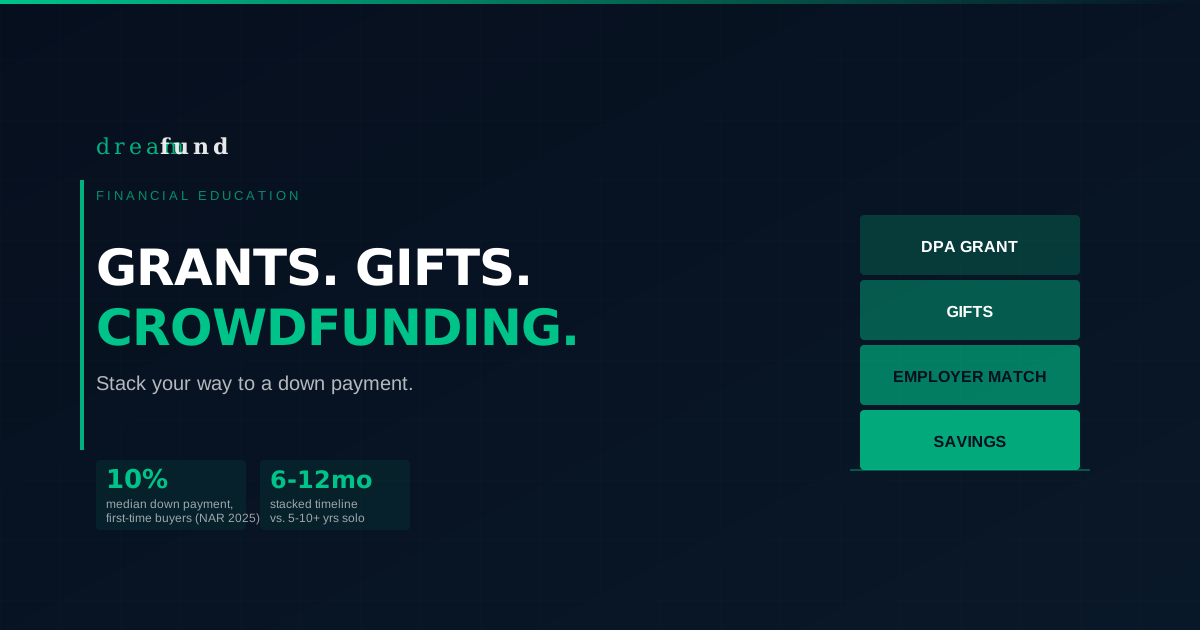
Saving a full down payment alone used to be the only path to homeownership. Today's first-time buyers are getting there faster by combining grants, gifts, and community crowdfunding into one down payment stack instead of carrying it alone.
Saving for a down payment used to mean one thing: setting aside a slice of every paycheck for years and hoping home prices held still. It rarely works out that way. Home prices tend to outrun a single paycheck's savings rate, and today's first-time buyer is paying the price for it. The median first-time buyer is now 40 years old, the oldest on record, and still puts down only 10% at closing, the highest share since 1989, according to the National Association of Realtors' 2025 Profile of Home Buyers and Sellers.
Waiting for a full cash cushion to appear in a savings account means watching home prices outrun the savings rate, year after year. The buyers moving fastest in 2026 are not necessarily the ones saving the hardest. They are the ones stacking.
What is down payment stacking?
Down payment stacking means combining several non-debt funding sources toward one down payment goal, instead of carrying the full amount alone. Rather than treating personal savings as the only lever, a stacked down payment draws on multiple sources at once, which can meaningfully shorten the timeline. A typical stack includes:
- Down payment assistance (DPA) grants. State and local housing programs that offer forgivable grants or zero-interest loans, commonly in the range of $10,000 to $30,000 depending on the program, location, and household income.
- Crowdfunded and registry gifts. Contributions from family and friends collected around a life milestone, such as a wedding, birthday, or new job, through a shared down payment registry like the one Dreamfund is built to organize.
- Employer-assisted housing benefits. A small but growing number of employers offer down payment matches or forgivable homebuying loans as part of workplace benefits.
- Family and relational gifts. Direct gift funds from family or close supporters, already one of the most common down payment sources nationally. Twenty-two percent of first-time buyers used gift or loan funds from family and friends in the past year, per NAR.
The rule lenders actually apply: mortgage underwriters generally accept down payment gifts and grants toward a purchase, provided they come with a gift letter or program documentation confirming the funds are a true gift or grant, not undisclosed debt the buyer is expected to repay.
Comparing down payment strategies
The timelines below are illustrative. Actual results vary by buyer, market, and program terms.
| Strategy | Speed to homeownership | Debt burden | Flexibility |
|---|---|---|---|
| Traditional solo savings | 5–10+ years | None | High, but loses ground to rising home prices |
| Government DPA only | 1–2 years | Depends on grant terms | Restricted by income and geographic caps |
| Dreamfund stacked model | 6–12 months | Zero additional debt | Highest, combines every source above |
How to get started
A down payment does not have to be a mountain climbed alone. Three moves start a stack: set up a Dreamfund registry so life milestones can convert into down payment gifts, ask HR whether an employer housing benefit already exists, and check which local DPA programs allow layered funding rather than requiring a single source.
Stack every source you have
Dreamfund helps buyers combine grants, community gifts, and personal savings into one lender-ready down payment goal. Join the waitlist to be among the first when we open.
Join the waitlistDreamfund is not a bank and does not hold customer funds. Upon launch, each customer's savings will be held in a deposit account opened in the customer's own name at an FDIC-member institution. FDIC deposit insurance applies to deposits at the member bank subject to applicable limits. Dreamfund itself is not FDIC-insured and does not guarantee any savings outcome. This article is for informational purposes only and does not constitute financial, mortgage, tax, or legal advice. Down payment assistance program availability, eligibility, and terms vary by program, lender, and state, and are subject to change. Mortgage underwriting standards vary by lender and loan program. Consult a HUD-approved housing counselor or licensed mortgage professional for guidance specific to your situation.