38X: The Homeowner vs. Renter Wealth Gap Is Not a Coincidence
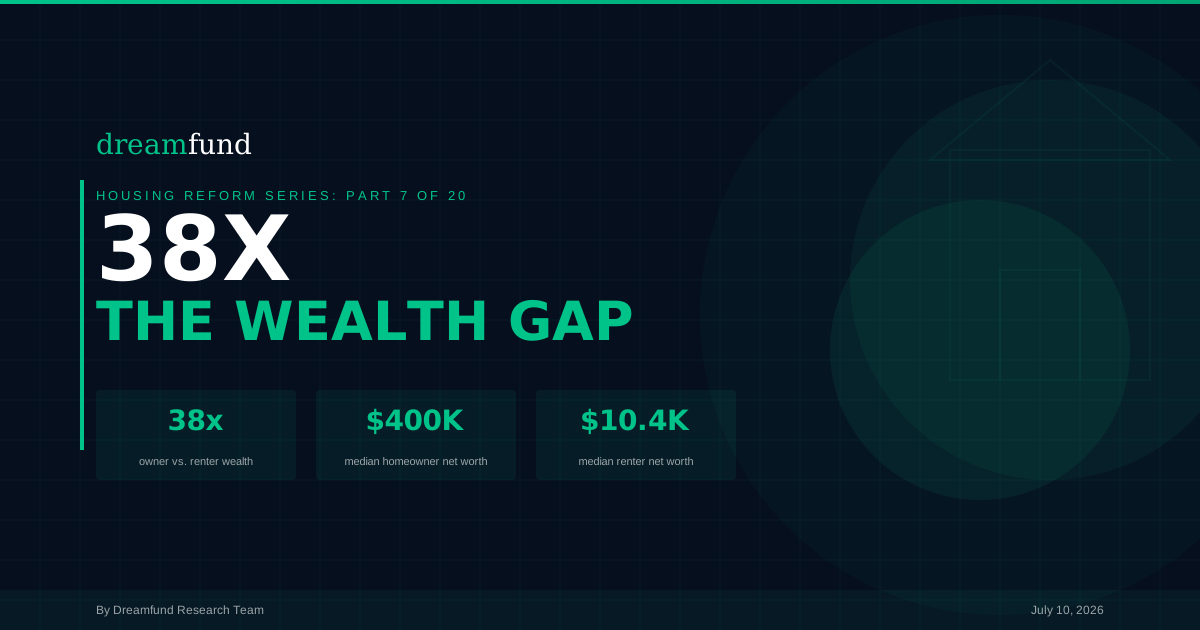
The 38x gap between homeowner and renter wealth is not an accident. It is the compounded result of decades of policy decisions that kept certain buyers out. The ROAD Act is the most serious attempt in a generation to reverse it.
The 38x Wealth Gap
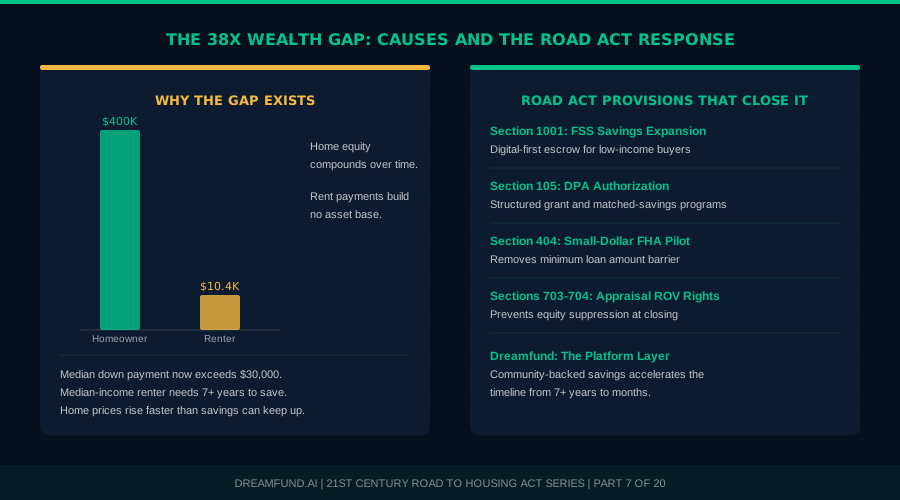
The median homeowner in America has a net worth of approximately $400,000. The median renter has a net worth of approximately $10,400. That is a 38x difference, and it is not primarily a story about income. It is a story about what compounding equity does over time when you own an appreciating asset, versus what renting does when every dollar paid disappears into someone else's balance sheet.
This gap did not emerge naturally. It was constructed through decades of policy: redlining that denied Black households access to federally backed mortgages, exclusionary zoning that concentrated affordable housing far from employment centers, minimum loan amount requirements that made small-dollar mortgages unprofitable, and appraisal practices that systematically undervalued homes in non-white neighborhoods. The gap is the sum of all of those decisions, compounded over generations.
Why the Wealth Gap Exists
Homeownership is the primary vehicle for wealth accumulation in America. The mechanism is straightforward: you buy a home, your mortgage balance declines every month, your property appreciates over time, and the difference between what you owe and what the home is worth is your equity. That equity is a real, liquid asset. You can borrow against it, sell it, or pass it to your heirs.
Renters have none of that. Monthly rent payments are operating expenses, not investments. A renter who pays $2,000 per month for 10 years has spent $240,000 and owns nothing. A homeowner who makes the same payment, with a portion going to principal, owns a growing asset at the end of that same decade.
The compounding effect is powerful. A home purchased for $300,000 that appreciates at the long-run average rate roughly doubles in value over 20 years. Combined with principal paydown, the equity position grows substantially even without any additional investment. Renters who cannot get into homeownership miss that entire compounding cycle.
The Down Payment Barrier as a Wealth Trap
The median down payment in the United States now exceeds $30,000. For a household earning the median income, saving that amount while covering rent, which is often higher than a mortgage payment for the same property, takes more than seven years. And the target is not standing still. Home prices have consistently outpaced wage growth, meaning the required savings amount grows faster than most renters can accumulate it.
This creates a trap: the households most in need of homeownership's wealth-building effects are precisely the ones who cannot clear the down payment barrier. They are priced out not by their inability to pay a mortgage, but by their inability to produce a lump sum upfront in a market where that lump sum grows faster than their savings can.
The Racial Dimension
The homeownership rate gap between white and Black households today is wider than it was in 1968, the year the Fair Housing Act was passed. That is a remarkable and damning fact. Fifty years of civil rights enforcement has not closed a gap that policy explicitly created. The reason is that the policies that built the gap, including redlining, exclusionary zoning, and discriminatory lending, created multi-generational wealth effects that persist even when the discriminatory policies are formally prohibited.
A white household whose grandparents bought a home in 1955 with an FHA loan has inherited wealth built on that asset. A Black household whose grandparents were denied that same loan has no comparable inherited base to draw from. The wealth gap is not just about current discrimination. It is about the compounding of past discrimination over decades.
How the ROAD Act's Provisions Address the Structural Causes
The 21st Century ROAD to Housing Act approaches the wealth gap through multiple legislative levers. Section 1001 expands Family Self-Sufficiency digital savings programs, creating structured pathways for low-income households to build homeownership equity. Section 105 authorizes new down payment assistance structures that directly attack the barrier that keeps most renters from becoming owners. Section 404's small-dollar FHA pilot removes the minimum loan amount that made affordable housing markets uneconomic for lenders. Sections 703 and 704 address appraisal bias, preventing equity suppression at the moment of closing.
No single provision solves the 38x gap. The gap is multi-causal and multi-generational. But collectively, these provisions represent the most systematic federal attempt in a generation to remove the structural barriers that perpetuate it. That matters because the alternative, waiting for market forces to close a gap that market forces created, has not worked.
How Dreamfund Closes the Savings Gap
The community-backed savings model directly addresses the down payment barrier. When a buyer's family members contribute to their homeownership goal, when an employer adds a housing benefit, when a community of supporters comes together around a single buyer's dream, the timeline compresses dramatically. A goal that would take seven or more years of solo saving can be reached in a fraction of that time with a community behind it.
Dreamfund is built to document every contribution in a form that lenders accept. The platform tracks the source of funds, produces the paper trail that underwriters require, and ensures that community gifts are structured as grants rather than loans. That documentation is not an afterthought. It is the product.
Frequently Asked Questions
Why is the homeownership wealth gap so large?
The wealth gap exists because homeownership is the primary vehicle for wealth accumulation in America. Homeowners build equity as their property appreciates and their mortgage balance declines. Renters pay into someone else's asset and accumulate no comparable base. The median homeowner net worth is approximately $400,000 compared to $10,400 for renters, a 38x multiple that reflects decades of compounding.
How does the down payment barrier perpetuate wealth inequality?
The median down payment in the United States now exceeds $30,000. For a median-income renter saving at a reasonable rate, that represents more than seven years of saving, during which home prices continue to rise. The target moves faster than most renters can save, and every year of delayed homeownership is a year of equity that was never built.
What parts of the ROAD Act specifically address the wealth gap?
The ROAD Act addresses the wealth gap through multiple provisions: Section 1001 expands FSS digital savings programs for low-income buyers; Section 105 authorizes new down payment assistance structures; Section 404 creates a small-dollar FHA pilot removing minimum loan amount barriers; and Sections 703–704 address appraisal bias that suppresses equity at closing. Together these provisions target the structural barriers that keep renters from becoming owners.
How can renters start building toward homeownership wealth today?
Renters can start by opening a dedicated homeownership savings account and setting a specific down payment target. Platforms like Dreamfund allow family members, employers, and community supporters to contribute directly to that goal, compressing the timeline from years to months. The key is treating the down payment as a community project rather than a solo effort.
Build your down payment with your community behind you.
Dreamfund is purpose-built for the ROAD Act era: AI-powered, community-backed, and lender-compliant from day one.
Join the waitlistDisclaimer: Dreamfund is not a bank and does not hold customer funds. Upon launch, each customer's savings will be held in a deposit account opened in the customer's own name at an FDIC-member institution. FDIC deposit insurance applies to deposits at the member bank subject to applicable limits. Dreamfund itself is not FDIC-insured and does not guarantee any savings outcome. This content is for informational purposes only and does not constitute financial, legal, or investment advice.