The Hidden Homeownership Tax: Appraisal Bias and the Fight for Fair Value

The appraisal gap has cost Black and Brown homebuyers billions in suppressed equity. Two sections of the ROAD Act are finally giving buyers the tools to fight back.
The Appraisal Bias Problem
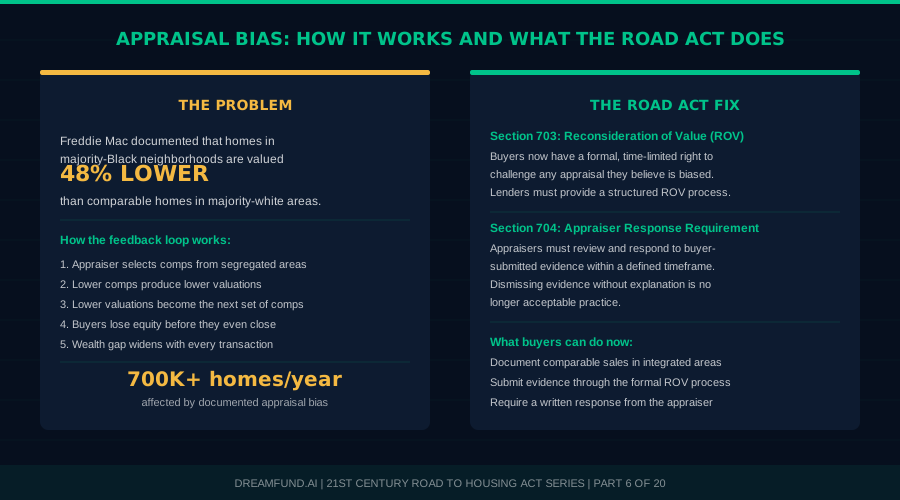
When a family in a majority-Black neighborhood puts their home on the market, they face a structural disadvantage that has nothing to do with the quality of their home. Freddie Mac research documented that valuations in majority-Black neighborhoods come in 48% lower on average than comparable properties in majority-white neighborhoods. That is not a market outcome. It is a measurement failure built into the appraisal process itself.
The scale of the problem is significant. More than 700,000 homes per year are affected by documented appraisal bias, and the average equity loss per affected homeowner runs approximately $48,000. Over a 30-year mortgage, that suppressed equity compounds into a wealth gap that no amount of financial discipline can overcome.
How Appraisal Bias Works in Practice
The mechanism is straightforward and pernicious. When an appraiser selects comparable sales to establish a property's value, they typically draw from nearby transactions. In neighborhoods shaped by decades of segregation, those nearby transactions reflect prior undervaluations. The feedback loop runs like this: appraisers select comps from segregated areas, lower comps produce lower valuations, lower valuations become the next round of comps, and buyers lose equity before they ever close.
This is not necessarily a story of individual appraiser malice. It is a story of a methodology that treats historical undervaluation as current market data. The result is structural: buyers in historically undervalued neighborhoods pay the same purchase price but receive less recognized equity. That gap follows them through every refinance, every home equity line, and ultimately into their net worth statement at retirement.
The challenge for buyers has always been that the process was opaque. An appraisal came in low, the deal fell through or the buyer had to make up the gap in cash, and there was no formal recourse. Lenders were not required to provide a structured challenge process. Appraisers were not required to justify their comp selections. That is precisely what the ROAD Act changes.
What Sections 703 and 704 Do
Section 703 of the 21st Century ROAD to Housing Act establishes formal consumer Reconsideration of Value rights. For the first time, buyers have a structured, time-limited right to challenge an appraisal they believe reflects bias. The process is not informal or discretionary. Lenders are required to implement a compliant ROV mechanism, and buyers are entitled to use it.
Section 704 goes further. It requires that appraisers actually respond to buyer-submitted evidence within a defined timeframe. Under the old regime, a buyer could theoretically request a reconsideration, but the appraiser was under no meaningful obligation to engage with the evidence. Under the ROAD Act framework, dismissing buyer evidence without written explanation is no longer an option.
Together, these two sections transform what was a polite suggestion into an enforceable consumer right. A buyer who believes their appraisal reflects neighborhood bias can now submit comparable sales from integrated areas, require the appraiser to review that evidence, and receive a written response. That documentation also creates a record if the buyer wants to escalate to a regulatory complaint.
The Practical Impact for Buyers in Undervalued Markets
The ROV framework does not guarantee that appraisals will be revised upward. What it does guarantee is a fair hearing. That shift in process has real downstream effects. Buyers who previously had no leverage now have a documented procedure. Real estate agents and housing counselors can prepare clients with comparable data before the appraisal occurs. And lenders operating under compliance obligations have incentive to take ROV requests seriously.
The practical implication is that buyers entering markets with documented appraisal bias should now arrive prepared. That means researching comparable sales in integrated neighborhoods, working with agents familiar with the ROV process, and understanding that a low appraisal is no longer the end of the road.
How Dreamfund Helps Buyers Navigate Appraisal Challenges
The appraisal gap creates a specific financial vulnerability: a buyer who expected to close with a 5% down payment may suddenly need to cover a $20,000 gap between the appraised value and the purchase price. Buyers who arrive at closing with documented, excess savings are far better positioned to absorb that gap without walking away from the deal.
Dreamfund's community-backed savings model builds toward a documented down payment that exceeds the minimum requirement. When a buyer's family, employer, or community contributes to their goal, the total savings cushion grows. That cushion is exactly what protects a deal when an appraisal comes in below expectations. The ROAD Act gives buyers the right to fight back. Dreamfund gives them the financial foundation to stay in the fight.
The Bigger Picture
Appraisal bias is one mechanism in a broader system that has historically suppressed homeownership and wealth accumulation for Black and Brown households. The ROAD Act's ROV provisions address one piece of that system. They do not solve the underlying comp data problem, and they do not undo decades of suppressed valuations. But they shift the leverage. Buyers who were previously powerless now have process rights. That is a meaningful change, and it is worth understanding exactly how to use it.
Frequently Asked Questions
What is appraisal bias and how does it affect homebuyers?
Appraisal bias occurs when a home is valued lower than comparable properties due to the racial or ethnic composition of the surrounding neighborhood. Freddie Mac research found that homes in majority-Black neighborhoods are valued 48% lower on average than comparable homes in majority-white neighborhoods. This suppresses the equity a buyer builds from day one and can cause a loan to fall through if the appraisal comes in below the purchase price.
What do Sections 703 and 704 of the ROAD Act do about appraisal bias?
Section 703 establishes formal consumer Reconsideration of Value (ROV) rights, giving buyers a structured, time-limited process to challenge an appraisal they believe is biased. Section 704 requires appraisers to review and respond to buyer-submitted evidence within a defined timeframe. Together, these provisions transform what was an informal complaint process into an enforceable consumer right.
What is a Reconsideration of Value and how does it work?
A Reconsideration of Value (ROV) is a formal request for an appraiser to review additional comparable sales that the buyer or their agent believes the appraiser overlooked. Under the ROAD Act, lenders must provide a structured ROV process, and appraisers must provide a written response to buyer-submitted evidence rather than dismissing challenges without explanation.
How can homebuyers protect themselves from appraisal bias?
Buyers can research comparable sales in integrated neighborhoods before the appraisal, document those comps, and submit them through the formal ROV process if the appraisal comes in low. Working with a real estate agent experienced in challenging appraisals in undervalued markets is also important. Arriving at closing with documented savings through a platform like Dreamfund ensures the deal can survive an appraisal gap without requiring the buyer to walk away.
Build your down payment with your community behind you.
Dreamfund is purpose-built for the ROAD Act era: AI-powered, community-backed, and lender-compliant from day one.
Join the waitlistDisclaimer: Dreamfund is not a bank and does not hold customer funds. Upon launch, each customer's savings will be held in a deposit account opened in the customer's own name at an FDIC-member institution. FDIC deposit insurance applies to deposits at the member bank subject to applicable limits. Dreamfund itself is not FDIC-insured and does not guarantee any savings outcome. This content is for informational purposes only and does not constitute financial, legal, or investment advice.