Gifting for Homeownership: What Supporters Need to Know About Gift Funds and Taxes
Want to help someone buy their first home? Here is everything supporters need to know about gift funds, IRS rules, gift letters, and how to make your contribution count.
You want to help someone buy their first home. You have the capacity to give something, even if it's not a large amount. And you're wondering whether your gift will actually help, and what you need to know to do it right.
This article answers those questions.
What Are Gift Funds?
In the mortgage world, "gift funds" refers to money given to a homebuyer by a family member, employer, or other approved source to help cover the down payment or closing costs.
Most conventional loan programs allow gift funds. FHA loans also allow them. The lender will ask for documentation, typically a gift letter that includes the donor's name and relationship to the buyer, the amount of the gift, the source of the funds, and a statement confirming that the gift does not need to be repaid.
The lender may also ask for bank statements from the donor showing where the funds came from.
As a supporter, your job is straightforward: give the gift, provide the letter if asked, and be prepared to show that the funds came from a legitimate source (your bank account, not borrowed funds).
The Tax Picture
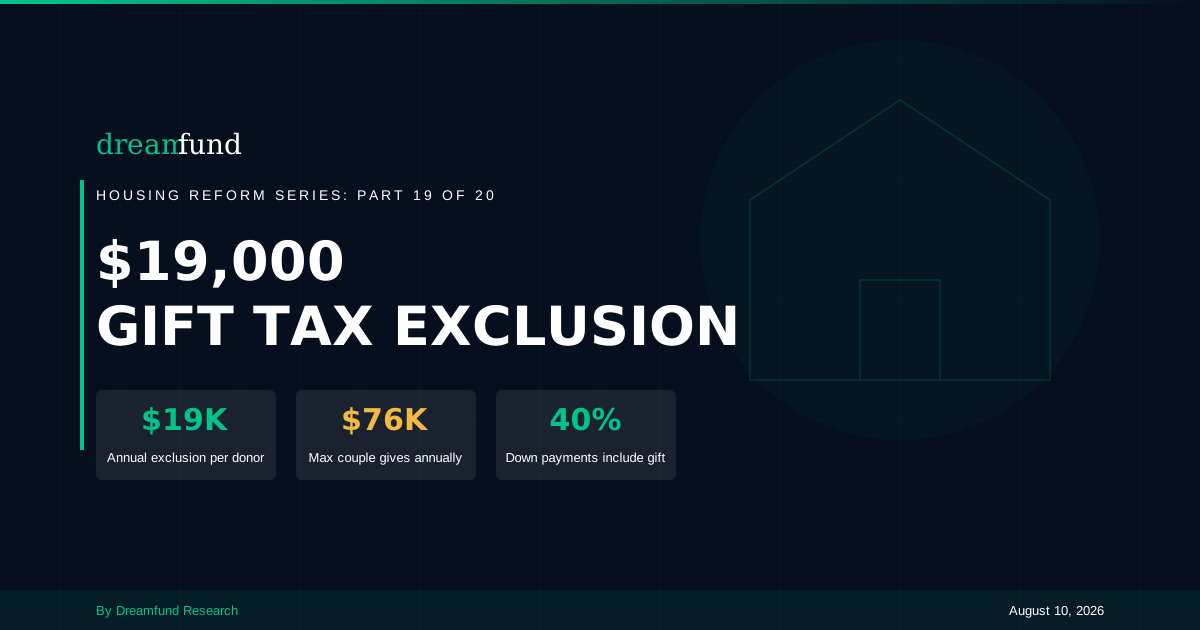
The IRS annual gift tax exclusion allows you to give up to a certain amount per person per year without any gift tax consequences. For 2026, that amount is $19,000 per donor per recipient, or $38,000 from a married couple to a single recipient. (Verify the current-year limit with your tax advisor, as this amount is adjusted periodically.)
Gifts below the annual exclusion require no reporting. You don't file any forms. The recipient doesn't owe income tax on a gift.
If you want to give more than the annual exclusion, you'll need to file IRS Form 709, the United States Gift and Generation-Skipping Transfer Tax Return. This doesn't necessarily mean you'll owe tax. Most donors have a lifetime exemption (over $13 million as of 2026) that covers gifts above the annual exclusion amount. But the filing requirement is real.
For most supporters making homebuying contributions, the annual exclusion is more than sufficient and no special tax action is required.
What Lenders Look For
Different loan programs have different rules about who can give gift funds. For conventional loans backed by Fannie Mae and Freddie Mac, the donor must be a relative, domestic partner, fiancé, or other approved party.
FHA loans have a broader definition of acceptable donors that includes close friends with a clearly defined interest in the buyer.
Some loan programs also have restrictions on when gift funds can be received relative to closing. Your buyer can advise you on timing once they're in the mortgage process.
The most important thing to know as a donor: communicate with the buyer. They will tell you what documentation the lender needs and when.
Contribution Platforms and the Paper Trail
If you're contributing through a platform designed for homebuying goal contributions, the documentation is largely handled for you. Transactions are timestamped and traceable. The buyer can produce a clear record of where the funds came from and when they were received.
This is one of the advantages of structured contribution platforms over informal cash or check gifts: the paper trail that mortgage lenders require is built in.
A Gift That Builds a Future
A gift like this is not about a financial return. It is about helping to secure a person's future, the stability of a family, and the long-term financial health of someone you care about.
Homeownership remains one of the most reliable wealth-building mechanisms available to working families. When you help someone cross the down payment threshold, you're not just helping them buy a house. You're helping them start a generational asset.
That's worth doing. And now you know exactly how to do it.
Find out how close you actually are
Dreamfund helps buyers and their communities close the down payment gap together. Join the waitlist to be among the first to launch when we open.
Join the waitlistDreamfund is not a bank and does not hold customer funds. Upon launch, each customer's savings will be held in a deposit account opened in the customer's own name at an FDIC-member institution. FDIC deposit insurance applies to deposits at the member bank subject to applicable limits. Dreamfund itself is not FDIC-insured and does not guarantee any savings outcome. This article is for informational purposes only and does not constitute financial, mortgage, or legal advice. Consult a HUD-approved housing counselor or licensed mortgage professional for guidance specific to your situation. Loan program requirements and down payment assistance programs vary by lender, state, and eligibility criteria and are subject to change.