The $100K Opportunity: Inside the FHA Small-Dollar Mortgage Pilot Program
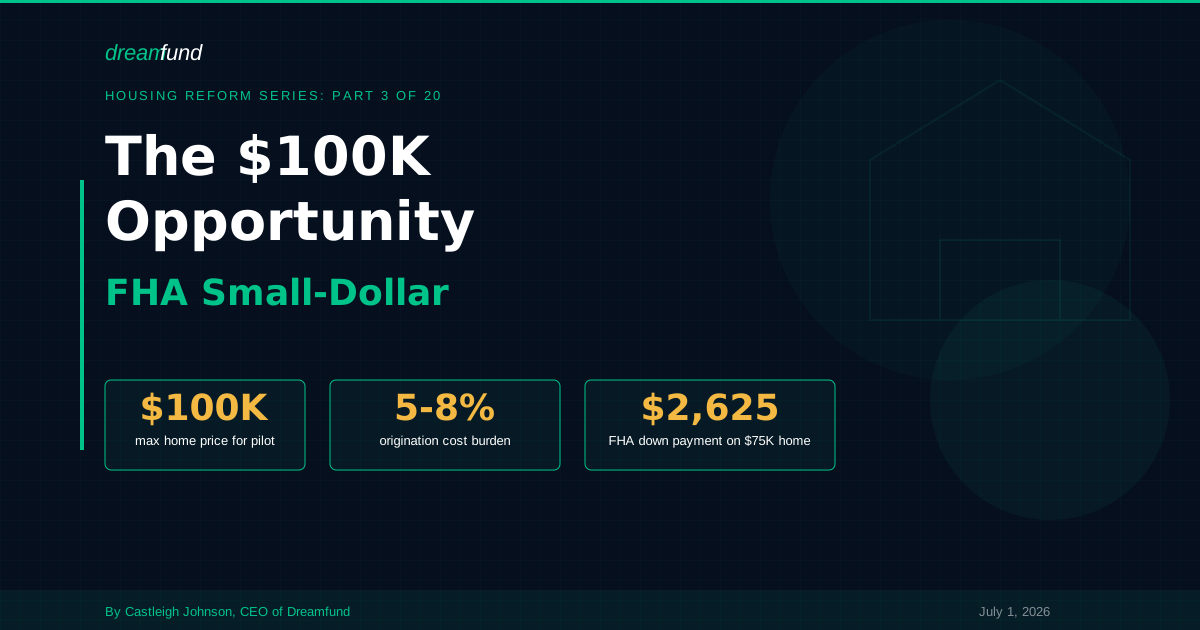
HOUSING REFORM SERIES: PART 3 OF 20 | 21st Century ROAD to Housing Act Deep Dive
For years, buying a $65,000 home has been harder than buying a $400,000 one. The economics of small-dollar lending broke decades ago. Section 105 of the ROAD Act is a direct attempt to fix that.
For years, buying a $65,000 home has been harder than buying a $400,000 one. The economics of small-dollar lending have been broken for decades, leaving millions of affordable properties sitting vacant while first-time buyers continue renting. Section 105 of the 21st Century ROAD to Housing Act is a direct attempt to fix that.
Why Small-Dollar Mortgages Disappeared
The collapse of small-dollar mortgage lending is not a mystery. It is math.
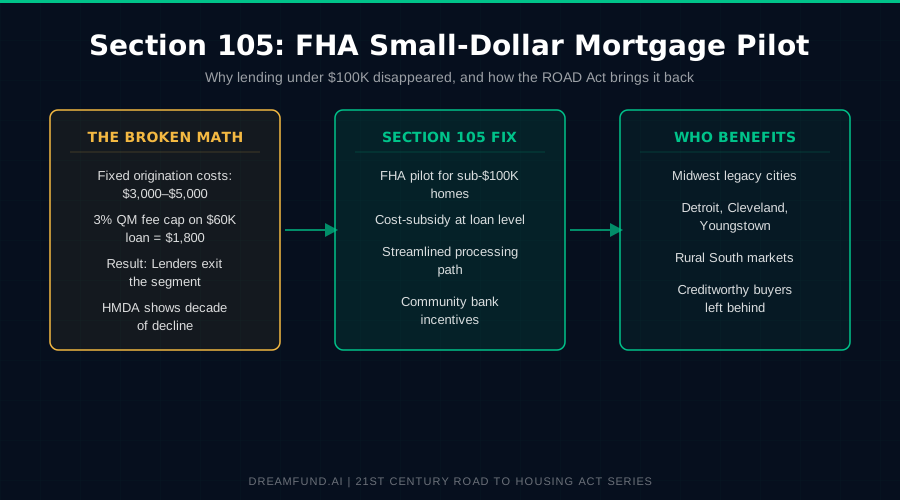
Originating a mortgage requires a fixed set of costs regardless of the loan amount. Appraisals, title searches, underwriting review, compliance checks, and closing coordination do not get cheaper because the purchase price is lower. On a $300,000 loan, those costs might represent 1 to 2 percent of the transaction. On a $60,000 loan, the same fixed cost structure balloons to 5 to 8 percent of the total deal.
For lenders operating on thin margins, the arithmetic does not work. A $55,000 FHA loan earns a fraction of the servicing revenue and fee income of a conventional loan while consuming nearly the same staff time and regulatory overhead. The result: lenders quietly exited the small-dollar segment. HMDA data has shown consistent, multi-decade declines in mortgages under $100,000 as a share of total originations.
The buyers left behind were not high-risk borrowers. Many had strong credit histories, stable income, and genuine savings. They simply wanted to purchase homes in markets where prices are still within reach, and the lending infrastructure had abandoned those markets entirely.
What Section 105 Actually Does
Section 105 of the ROAD Act creates a dedicated FHA pilot program for mortgage loans on properties priced below $100,000. The program addresses the broken economics directly by subsidizing lender costs at the loan level.
Specific mechanisms include reduced origination cost offsets, streamlined processing pathways for qualifying small-dollar FHA loans, and expanded lender participation incentives for community banks, credit unions, and mission-driven lenders.
The pilot is time-limited with data collection requirements built in. The intent is to generate evidence on whether cost-subsidy interventions can sustainably restore small-dollar lending activity before considering permanent program design.
The Target Markets
This program was not designed for coastal metropolitan areas where $100,000 does not buy a parking space. The small-dollar mortgage market is concentrated in specific geographies where housing remains genuinely affordable but financing has dried up.
The core target markets: Midwest legacy cities like Detroit, Cleveland, Gary, and Youngstown still have significant housing stock priced under $100,000. Rural South markets across Mississippi, Alabama, Louisiana, and Arkansas have median home prices well below $100,000. Legacy industrial corridors from western Pennsylvania through the Great Lakes region combine affordable housing stock with working-class buyer populations who are creditworthy but underserved.
How Dreamfund's Small-Dollar Home Path Aligns
Dreamfund built its platform around the reality that the path to homeownership is not one-size-fits-all. Our Small-Dollar Home Path tier was designed specifically for buyers targeting homes under $100,000, in exactly the markets Section 105 is meant to serve.
A 3.5 percent FHA down payment on a $75,000 home is $2,625. That is a goal that community support can realistically fund, that a motivated saver can reach in months rather than years, and that Dreamfund's platform is purpose-built to help buyers achieve.
When Section 105 restores access to FHA financing in these markets, buyers who have been preparing through Dreamfund arrive at the closing table ready. They have documented savings history, a completed down payment, and a community of supporters who contributed toward their goal.
The numbers work. A $2,625 down payment goal on a $75,000 home is achievable through community gifting in months, not years. Dreamfund's platform is built to get buyers there.
The Broader Opportunity
Section 105 matters beyond the pilot itself. It signals federal acknowledgment that the small-dollar lending gap is a structural policy failure, not a market efficiency. For first-time buyers in Midwest and rural markets, this program offers something that has been scarce for two decades: a real, federally backed mortgage product designed for the price points that exist in their communities. The homes are there. The buyers are there. Section 105 is an attempt to make sure the financing is there too.
Frequently Asked Questions
What is the FHA Small-Dollar Mortgage Pilot in the ROAD Act?
Section 105 establishes a dedicated FHA pilot program for mortgage loans on properties priced below $100,000. It subsidizes lender origination costs to make small-dollar loans economically viable, reopening financing for affordable homes in Midwest and rural markets where lending had effectively disappeared.
Why did small-dollar mortgages disappear?
Fixed origination costs, including appraisals, title searches, and compliance, do not scale down with loan size. On a $60,000 loan, those fixed costs can represent 5–8 percent of the total transaction. The existing 3 percent fee cap under Qualified Mortgage rules made small-dollar loans unprofitable for lenders, driving them out of the segment.
Which markets benefit most from Section 105?
Midwest legacy cities like Detroit, Cleveland, and Youngstown, rural South markets across Mississippi, Alabama, and Louisiana, and legacy industrial corridors from western Pennsylvania through the Great Lakes region. These are markets where homes priced under $100,000 still exist but financing has been unavailable.
How does Dreamfund fit into the small-dollar mortgage picture?
Dreamfund's Small-Dollar Home Path tier is calibrated for buyers targeting homes under $100,000. A 3.5 percent FHA down payment on a $75,000 home is $2,625, a goal that community gifting through Dreamfund can fund in months. When Section 105 restores lending access, buyers prepared through Dreamfund arrive at the closing table ready.
Start Building Your Down Payment Today
Join thousands of future homeowners using Dreamfund to save smarter, involve their community, and arrive at the closing table ready. No bank required to get started.
Join the WaitlistDreamfund is not a bank and does not hold customer funds. Upon launch, each customer's savings will be held in a deposit account opened in the customer's own name at an FDIC-member institution. FDIC deposit insurance applies to deposits at the member bank subject to applicable limits. Dreamfund itself is not FDIC-insured and does not guarantee any savings outcome. This content is for informational purposes only and does not constitute financial, legal, or investment advice.