No Additional Funds Authorized: The Biggest Execution Gap in the ROAD Act
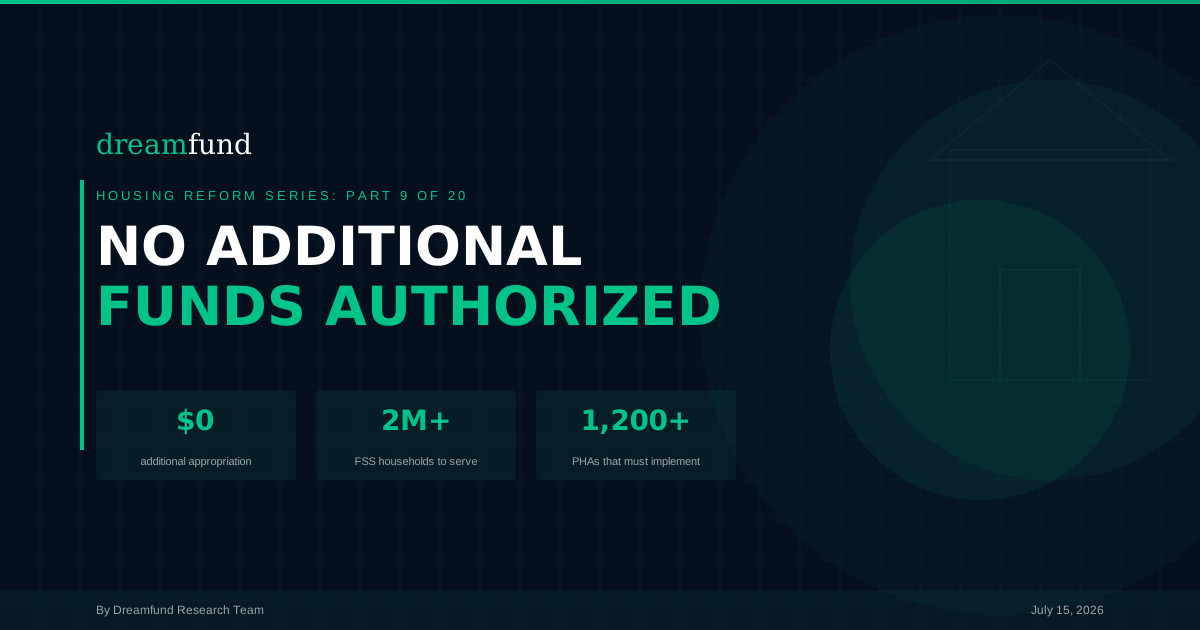
Congress wrote "no additional funds authorized" into the ROAD Act. That phrase creates the biggest implementation challenge in the bill, and the biggest opportunity for technology platforms that are already built for it.
The Phrase That Changes Everything
Buried in the text of the 21st Century ROAD to Housing Act, appearing multiple times across different sections, is the phrase that housing policy veterans recognize immediately: "no additional funds are authorized to carry out this section." In plain terms, that means the programs are mandated. The funding to run them is not provided. Agencies must find the money within what they already have.
This is not an unusual legislative device. Congress has used it for decades across a wide range of programs. The practical effect is that it converts a mandate into an unfunded mandate, and the difference matters enormously at the implementation level. A PHA that is told to digitize its Family Self-Sufficiency program and serve 2,000 additional households is also being told to do so without hiring additional staff, without new technology budgets, and without operational resources beyond what it already spends.
What It Means for Each Agency
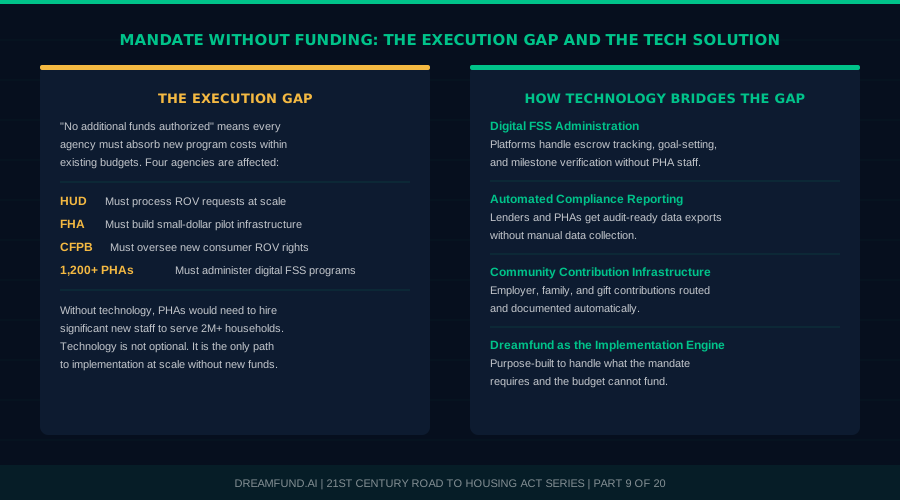
Four agencies bear the heaviest implementation load under the ROAD Act. HUD must process Reconsideration of Value requests under the new Section 703–704 framework, which requires new workflows, new staff training, and new recordkeeping systems. FHA must build the infrastructure for the small-dollar loan pilot authorized under Section 404, creating underwriting and servicing pathways for loan sizes that the agency has historically treated as uneconomic. CFPB must develop and implement the consumer disclosure requirements around the new ROV rights framework. And more than 1,200 public housing authorities across the country must stand up digital FSS programs for a population of more than two million eligible households.
None of these agencies will receive new appropriations to fund this work. They are expected to reprioritize existing resources, find efficiencies in current operations, and partner with private-sector infrastructure where it exists. The last option is the one that actually works at scale.
The Execution Gap This Creates
Consider a PHA serving 5,000 households. Under the expanded FSS framework, it may now be responsible for digital savings tracking, employer contribution coordination, milestone verification, and compliance documentation for a population it previously could not serve at all. Its existing caseworkers are already managing full caseloads. Its IT infrastructure was not built for automated savings administration. Its budget has not increased.
Without technology, the math does not work. Serving two million-plus households with FSS-compatible digital savings programs would require caseworker headcount increases that no PHA budget can absorb. The gap between the mandate and the budget is not a rounding error. It is a structural problem that only technology can bridge.
The same logic applies to lenders under the ROV framework. Processing Reconsideration of Value requests, tracking appraiser responses, maintaining audit trails for regulatory examination: all of this requires systems that most mid-size lenders do not currently have. Compliance technology fills that gap. Without it, the ROV right exists on paper but not in practice.
Why Technology Is Not Optional
The ROAD Act's no-additional-funds provision is, in a practical sense, a mandate for technology adoption. The only way to implement new programs at scale without proportional budget increases is through automation. Automated savings tracking replaces manual caseworker touchpoints. Digital contribution management replaces paper-based gift documentation. Algorithmic milestone verification replaces individual case review.
This is not a novel insight. Federal housing policy has been moving in this direction for years. The ROAD Act accelerates that trajectory by creating specific new program obligations without the funding to administer them the old way. The agencies that implement successfully will be the ones that partner with technology infrastructure that already exists.
Dreamfund as the Implementation Engine
Dreamfund is not a compliance software company. But the platform it has built addresses precisely the infrastructure gap that the ROAD Act's no-additional-funds provision creates. The core product, community-backed savings toward a documented down payment, runs on the same digital rails that PHAs and lenders need for FSS administration: contribution tracking, goal documentation, milestone verification, and lender-ready fund sourcing reports.
A PHA that partners with Dreamfund can offer digital FSS-compatible savings to its entire eligible population without building internal technology infrastructure. A lender that integrates Dreamfund documentation can receive verified, compliant down payment packages without developing its own gift fund processing workflow. An employer that offers Dreamfund as a housing benefit can make CRA-qualifying community reinvestment contributions through a platform that already produces the audit documentation regulators require.
The ROAD Act's mandate without funding creates a gap. The gap requires technology. The technology that fills it looks a great deal like what Dreamfund was built to do.
The Broader Policy Lesson
The ROAD Act is not unique in this pattern. American social policy has increasingly relied on mandate-without-funding as a legislative mechanism, implicitly assuming that private-sector infrastructure will emerge to bridge the execution gap. In housing specifically, that assumption has a mixed track record. Mandates without infrastructure often produce programs that exist in statute but do not reach the households they were designed to serve.
The ROAD Act gives the private sector a clear signal: build the infrastructure for digital homeownership savings administration, and there is a massive addressable market of PHAs, lenders, employers, and buyers who need exactly that. The mandate creates the demand. The technology creates the delivery.
Frequently Asked Questions
What does "no additional funds authorized" mean in the ROAD Act?
No additional funds authorized is a legislative provision stating that the programs created by the ROAD Act must be implemented using existing agency budgets without new Congressional appropriations. Agencies like HUD, FHA, CFPB, and the 1,200-plus public housing authorities must absorb the cost of new program administration within current funding levels.
How can PHAs and lenders implement ROAD Act programs without additional funding?
Technology is the primary answer. Automated digital platforms can handle FSS escrow tracking, contribution management, goal monitoring, and compliance documentation without requiring proportional increases in agency staff. PHAs that partner with purpose-built platforms can serve significantly more households without hiring additional caseworkers.
What is the role of technology in implementing the ROAD Act?
Technology serves as the implementation infrastructure that makes mandate-without-funding possible at scale. Digital savings platforms handle the administrative burden of tracking contributions and milestones. Automated reporting replaces manual data collection. Lender integrations replace paper-based documentation. Without technology, implementing the ROAD Act at the scale of 2 million-plus FSS-eligible households would require staff increases that the budget does not support.
How does Dreamfund help agencies implement ROAD Act programs at scale?
Dreamfund provides the platform infrastructure that PHAs, lenders, and employers need to administer ROAD Act savings programs without additional headcount. The platform handles contribution tracking, goal documentation, compliance reporting, and lender-ready fund sourcing documentation. A PHA that partners with Dreamfund can offer digital FSS-compatible savings to its entire eligible population without building internal technology infrastructure.
Build your down payment with your community behind you.
Dreamfund is purpose-built for the ROAD Act era: AI-powered, community-backed, and lender-compliant from day one.
Join the waitlistDisclaimer: Dreamfund is not a bank and does not hold customer funds. Upon launch, each customer's savings will be held in a deposit account opened in the customer's own name at an FDIC-member institution. FDIC deposit insurance applies to deposits at the member bank subject to applicable limits. Dreamfund itself is not FDIC-insured and does not guarantee any savings outcome. This content is for informational purposes only and does not constitute financial, legal, or investment advice.