The $19,000 Gift Tax Strategy Inside the ROAD Act Nobody Is Teaching
HOUSING REFORM SERIES: PART 19 OF 20 | 21st Century ROAD to Housing Act Deep Dive
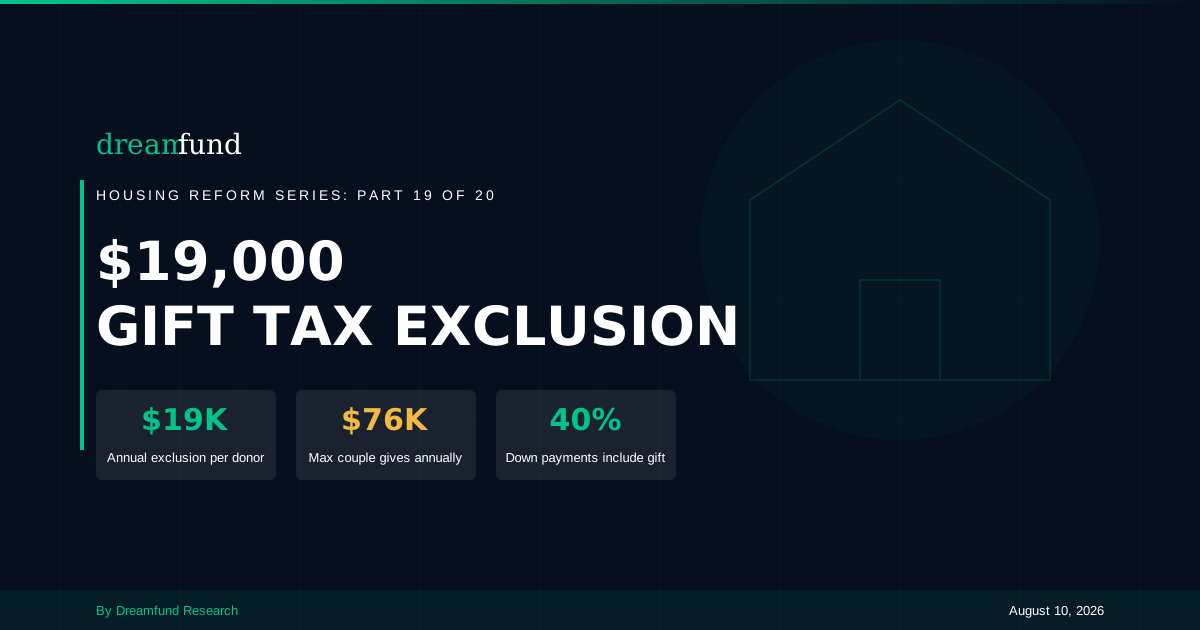
The 2026 annual gift tax exclusion is $19,000 per donor per recipient. Two parents can give a child and their spouse up to $76,000 this year with no gift tax return required. Most families with homebuying children have no idea this tool exists.
There is a legal, tax-efficient, and largely underutilized tool sitting inside the federal tax code that can dramatically accelerate a first-time buyer's path to homeownership. It is not a grant program. It is not a down payment assistance fund. It is an existing provision of the gift tax rules that most American families have never been told about in the context of homebuying.
The annual gift tax exclusion allows any individual to give up to $19,000 in 2026 to any other individual without incurring any gift tax liability or even needing to file a gift tax return. This exclusion applies per donor, per recipient, per calendar year.
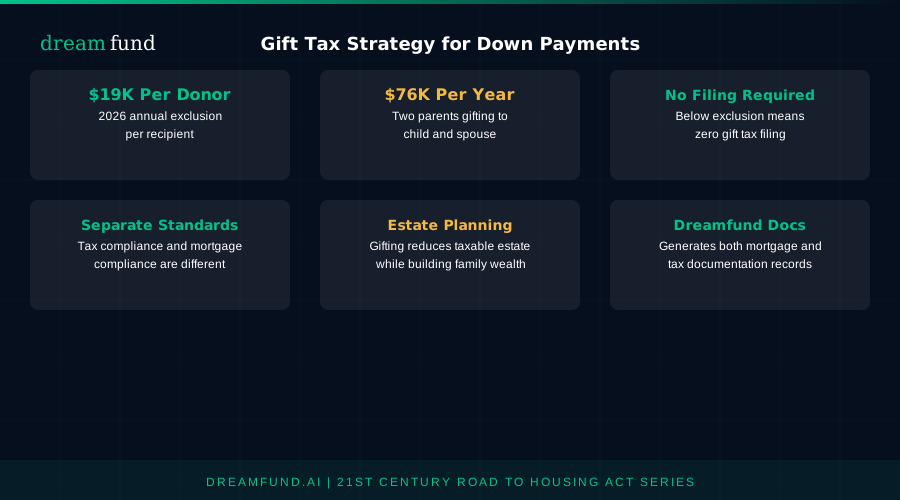
The practical implication for a homebuying family is significant. Two parents, each giving to a child and the child's spouse, can transfer $76,000 in a single calendar year with zero tax paperwork. That amount represents a substantial down payment contribution in many markets, particularly when combined with the buyer's own savings and other community contributions.
How the Annual Exclusion Actually Works
The annual gift tax exclusion is a per-person, per-recipient limitation. Each calendar year, every individual can give up to the exclusion amount to any number of different recipients without triggering gift tax or filing requirements. The $19,000 resets every January 1.
Married couples can each give the full exclusion amount. This is sometimes called gift-splitting, though technically each spouse is simply making their own separate gift. Two parents with one child who is married have four gifting relationships: each parent to the child, and each parent to the child's spouse. Four exclusions. Four separate $19,000 gifts. No forms required.
Gifts above the annual exclusion do not automatically trigger gift tax. Amounts above the exclusion apply against the donor's lifetime federal gift and estate tax exemption, which in 2026 is significantly higher than most families will use. The gift tax only becomes an actual cash obligation for donors who have exhausted their lifetime exemption, which primarily applies to high-net-worth estates.
For the vast majority of American families, the practical answer to "will we owe gift tax on helping our child buy a home?" is no. The annual exclusion structure was designed to allow exactly this kind of intergenerational wealth transfer.
Gift Tax and Mortgage Compliance Are Different Systems
This is one of the most important points in this entire article, and the one that causes the most confusion. The federal gift tax exclusion and the mortgage lender's gift fund documentation requirements are completely separate compliance frameworks. They do not automatically satisfy each other.
A gift that is below the annual exclusion threshold and requires no IRS filing still requires full mortgage gift documentation if it is being used for a down payment. Conversely, a gift that has been fully documented for mortgage purposes may or may not require a gift tax return depending on the amount and the donor's prior gifting history.
Buyers who receive family contributions toward their down payment need to satisfy both frameworks. The tax framework says whether a gift tax return is required. The mortgage framework says what documentation the lender needs to approve the loan. Both must be addressed, but they are addressed through different processes.
Multi-Year Gifting Strategies
Buyers who are planning their purchase on a longer timeline have additional options. Because the annual exclusion resets each January 1, a family that begins gifting strategically one or two years before the target purchase date can accumulate significantly more than the single-year maximum.
Two parents gifting $76,000 per year over two years contribute $152,000 to a child's down payment fund with no gift tax forms and no lifetime exemption erosion. Over three years, that number reaches $228,000. For buyers targeting homes in high-cost markets where a 20 percent down payment might represent $150,000 or more, multi-year family gifting is a serious financial planning tool, not a theoretical one.
The seasoning advantage is significant as well. Money that has been in the buyer's account for more than 60 days is considered seasoned by most mortgage lenders and requires substantially less documentation at closing. Multi-year gifting strategies automatically produce seasoned funds because the contributions arrive well in advance of the purchase timeline.
The Estate Planning Dimension
For parents and grandparents with estate planning considerations, gifting toward a child's home purchase serves a dual financial purpose. It helps the next generation build equity in a primary wealth-building asset. And it reduces the donor's taxable estate by removing assets that would otherwise compound and potentially become subject to estate taxes.
Annual exclusion gifts do not count against the donor's lifetime exemption and therefore provide the maximum estate reduction benefit per dollar gifted. For families who are thinking simultaneously about intergenerational wealth transfer and housing access, coordinating annual exclusion gifting with a structured homeownership savings platform like Dreamfund is a natural alignment of goals.
How Dreamfund Makes Gift Compliance Seamless
Dreamfund generates mortgage-compliant documentation for every contribution at the moment it is made. A family that contributes to a buyer's Dreamfund campaign receives automatic documentation that includes the gift letter language required by lenders, a timestamped transfer record, and source-of-funds information.
This means families can contribute throughout the buyer's savings journey without needing to remember to prepare documentation later. By the time the buyer applies for a mortgage, every contribution has a complete documentation trail. The lender gets a clean, organized gift fund package rather than a pile of bank statements and a frantic request for a gift letter from a parent who contributed three years ago and can barely remember the amount.
Frequently Asked Questions
What is the 2026 annual gift tax exclusion?
The 2026 annual gift tax exclusion is $19,000 per donor per recipient. Any individual can give up to $19,000 to any other individual in 2026 without incurring gift tax or needing to file a gift tax return. A married couple can each give $19,000 to the same recipient for a combined $38,000.
How much can two parents give a child and their spouse for a down payment?
In 2026, two parents can each give $19,000 to their child and $19,000 to their child's spouse. That is four separate $19,000 gifts totaling $76,000. All four gifts fall below the annual exclusion threshold, meaning no gift tax return is required from either parent.
Is a gift tax exclusion the same as a mortgage gift fund?
No. The gift tax exclusion is a federal tax rule governing when a donor must file IRS Form 709. Mortgage gift fund requirements are lender and loan program rules governing documentation. They are separate compliance frameworks. A gift that complies with gift tax rules still needs proper mortgage documentation.
Does gifting for a down payment affect the donor's estate?
Annual exclusion gifts do not count against the donor's lifetime federal estate and gift tax exemption. They reduce the donor's taxable estate directly. For families with estate planning goals, gifting toward a child's home purchase serves dual purposes: helping the next generation build equity while removing assets from the donor's potential taxable estate.
Put your family's generosity to work.
Dreamfund creates mortgage-compliant documentation for every family contribution. No paperwork scrambles. No last-minute gift letters. Just a clean path to closing.
Join the waitlistDisclaimer: This article is for informational purposes only and does not constitute financial, legal, tax, or investment advice. Gift tax rules and exclusion amounts are subject to change. Consult a qualified tax professional, estate planning attorney, and mortgage professional before making decisions based on information in this article.
Dreamfund is not a bank and does not hold customer funds. Upon launch, each customer's savings will be held in a deposit account opened in the customer's own name at an FDIC-member institution. FDIC deposit insurance applies to deposits at the member bank subject to applicable limits. Dreamfund itself is not FDIC-insured and does not guarantee any savings outcome.