Housing Policy - Part 10 of 20
HUD Counseling Gets an Upgrade: What the ROAD Act Means for Housing Advisors
Housing counseling is one of the most evidence-backed interventions in homeownership policy. The ROAD Act finally gives it the infrastructure it deserves.
What HUD-Approved Housing Counseling Is
HUD-approved housing counseling is one of the federal government's quietest success stories in homeownership policy. The program funds a nationwide network of nonprofit agencies whose certified counselors provide free or low-cost financial guidance to homebuyers, primarily first-time buyers who are navigating the mortgage process for the first time. Services range from pre-purchase homebuyer education to budget and credit counseling to help navigating down payment assistance programs and loan options.
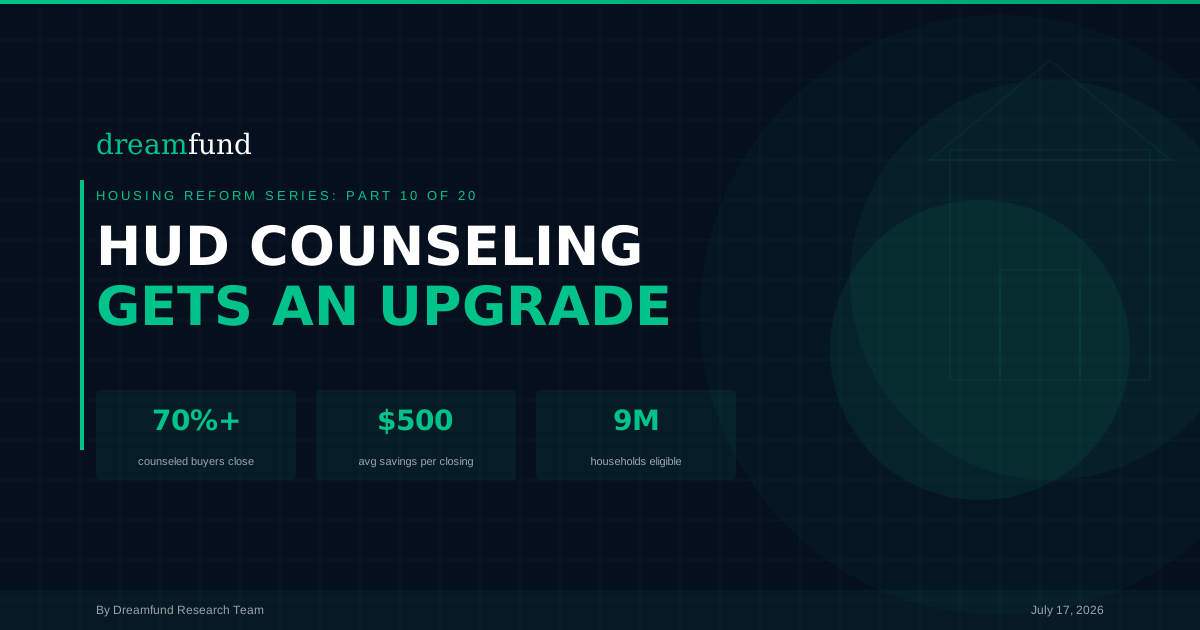
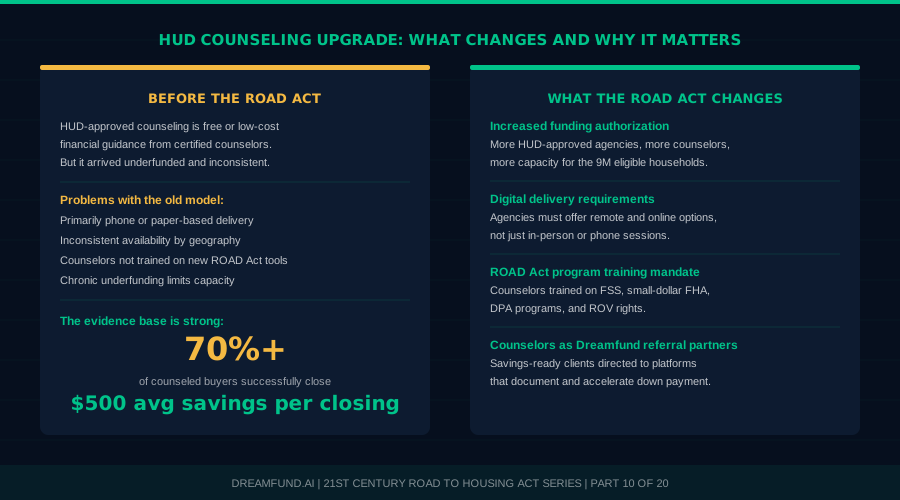
The evidence base is strong. Buyers who complete HUD-approved counseling close at higher rates, default at lower rates, and save an average of $500 per closing through better product selection and negotiation. More than 70% of counseled buyers successfully complete their purchase. For a program that costs relatively little to deliver, the return on investment in homeownership outcomes is exceptional.
Nine million households are eligible for HUD counseling annually. The program serves a fraction of that number, constrained by funding, geographic availability, and the friction of finding and accessing services that are primarily delivered by phone or in person.
The Current State of Housing Counseling
Despite its track record, housing counseling has arrived at the ROAD Act era underfunded, inconsistently available, and structurally limited in how it can scale. Most counseling agencies operate on thin margins with small staffs. Geographic coverage is uneven: well-served urban markets have multiple agencies to choose from, while rural and suburban markets may have only one option, or none accessible without significant travel.
The delivery model has also not kept pace with how people access services. While many agencies now offer phone sessions, digital-first delivery remains the exception rather than the rule. A buyer in rural Mississippi or a working parent who cannot take time off for an in-person appointment faces real barriers to accessing counseling that the evidence says would materially improve their homeownership outcomes.
Counselor training has also lagged program development. The ROAD Act introduces new consumer rights, new savings programs, and new loan structures that counselors need to understand to serve their clients effectively. Without updated training, even well-meaning counselors may steer clients away from options that would benefit them, simply because they were not trained on the new framework.
What the ROAD Act Does for Housing Counseling
The ROAD Act addresses housing counseling on three dimensions. First, it increases the funding authorization for HUD-approved counseling agencies, expanding the capacity of the network to serve more of the nine million eligible households. More funded agencies means more counselors, more available appointments, and reduced wait times in markets that are currently capacity-constrained.
Second, the ROAD Act establishes digital delivery requirements for HUD-approved agencies. Counselors must now offer remote and online session options, not just in-person or phone. This is a significant shift for a program that has historically been local and relationship-based. Digital delivery requirements expand geographic reach, reduce scheduling friction, and make counseling accessible to buyers whose work schedules, childcare obligations, or transportation limitations have historically kept them out.
Third, the ROAD Act mandates that HUD update counselor training curricula to cover the new programs created by the legislation. Counselors must be trained on the digital FSS savings expansion, the small-dollar FHA pilot, the DPA authorization structure, and the new consumer ROV rights under Sections 703 and 704. That training mandate ensures that the counseling network functions as an informed guide to the full set of tools the ROAD Act creates, not just the pre-existing options.
Why Housing Counseling Matters for First-Time Buyers
The value of housing counseling is not primarily informational. A motivated buyer can research mortgage options independently. The value is navigational. The homebuying process involves multiple vendors, multiple service providers, multiple government programs with their own eligibility rules, and a set of decisions that most buyers make once or twice in a lifetime. A counselor who has guided hundreds of buyers through that process provides a level of contextual judgment that no online resource can replicate.
Counselors help buyers understand how their credit profile affects their loan options, which DPA programs they qualify for and how to apply, how to read a loan estimate, and what questions to ask at closing. They catch mistakes that would otherwise cost thousands of dollars. They connect buyers with programs they did not know existed. And they provide accountability: a buyer who has committed to a counseling relationship is more likely to stay the course when the homebuying process gets frustrating.
The counseling relationship also produces documentation. Completion certificates from HUD-approved counseling agencies are often required for DPA program eligibility, and they are increasingly valued by lenders as evidence of borrower preparation. Under the ROAD Act, that documentation takes on additional significance as the counseling network becomes the primary delivery channel for information about new consumer rights and programs.
Counselors as Dreamfund Referral Partners
The expanded counseling network represents a natural distribution channel for platforms that help buyers build and document their down payment. A housing counselor working with a buyer who is 12 to 18 months from being mortgage-ready needs resources to recommend for that savings period. A platform that allows community members to contribute, tracks every dollar in a lender-compliant format, and produces the documentation that underwriters require fills a specific gap that counselors currently have no good answer for.
Counselors are trusted advisors. When they recommend a savings platform, buyers follow that recommendation. Building relationships with HUD-approved counseling agencies is one of the highest-leverage distribution strategies available to Dreamfund, precisely because counselors reach buyers at exactly the moment when they need savings infrastructure.
The Counseling Network as a System
The ROAD Act's counseling provisions do not exist in isolation. They are part of a system. The FSS digital savings expansion gives buyers a structured savings framework. The DPA authorization gives buyers access to grant funding. The small-dollar FHA pilot opens markets that were previously inaccessible. The ROV rights give buyers tools to fight appraisal bias. Housing counseling is the connective tissue that ensures buyers understand and can access all of these tools.
An expanded, digitally-delivered, properly-trained counseling network means more buyers entering the mortgage process informed, prepared, and connected to the programs that can help them close. That is good policy. It is also, for platforms like Dreamfund that serve the same buyers, a larger and better-prepared market.
Frequently Asked Questions
What is HUD-approved housing counseling and who qualifies?
HUD-approved housing counseling is free or low-cost financial guidance provided by certified counselors at agencies that have received approval from the U.S. Department of Housing and Urban Development. Services include pre-purchase homebuyer education, budget and credit counseling, and help navigating mortgage options and down payment assistance programs. Most first-time homebuyers qualify, with no income ceiling for pre-purchase counseling.
What does the ROAD Act change about housing counseling?
The ROAD Act increases funding authorization for HUD-approved counseling agencies, expands digital delivery requirements so counselors must offer remote and online sessions, and mandates that counselors receive training on new ROAD Act programs including the FSS digital savings expansion, small-dollar FHA pilot, DPA authorization, and ROV rights. The combination of more funding, digital delivery, and program-specific training addresses the three main weaknesses in the current counseling system.
How does housing counseling improve homeownership outcomes?
Research consistently shows that buyers who complete HUD-approved counseling have higher success rates at closing, lower mortgage default rates, and save an average of $500 per closing through better product selection and negotiation. More than 70% of counseled buyers successfully complete their purchase. The education component helps buyers understand their options and avoid costly mistakes in loan selection.
How do I find a HUD-approved housing counselor?
HUD maintains a searchable directory of approved counseling agencies at hud.gov/counseling. Buyers can search by state, county, or zip code. Many agencies offer phone and online sessions in addition to in-person appointments. Under the ROAD Act's new digital delivery requirements, remote access to counseling will expand significantly, making it easier for buyers in underserved areas to access services.
Build your down payment with your community behind you.
Dreamfund is purpose-built for the ROAD Act era: AI-powered, community-backed, and lender-compliant from day one.
Join the waitlist